
Attachment and Anticipated Loss
The Character of RainThis flow follows the Narrator (God)'s movement from childish security toward an explicit philosophy of loving despite inevitable separation.
increasing Bearing strength in each event
 decreasing
Bearing strength in each eventdecreasingA Bond with Nishio-san
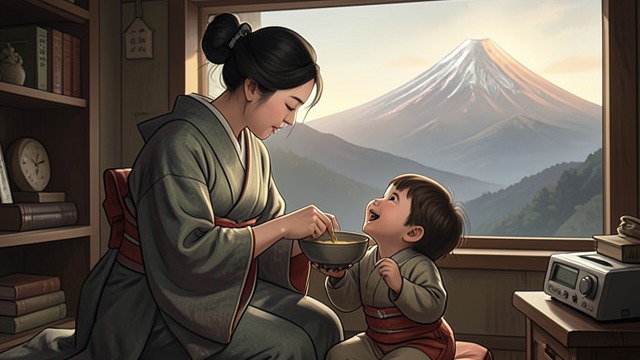
A Bond with Nishio-san
Care becomes devotion
Nishio-san feeds, comforts, sings to, and carries the Narrator (God). Her affection gives the child a daily sense of being cherished.
A chosen relationship
The Narrator (God) sees Nishio-san not simply as a caregiver but as a central figure in its private world. The bond helps make Japan feel like home.
The Divine Child
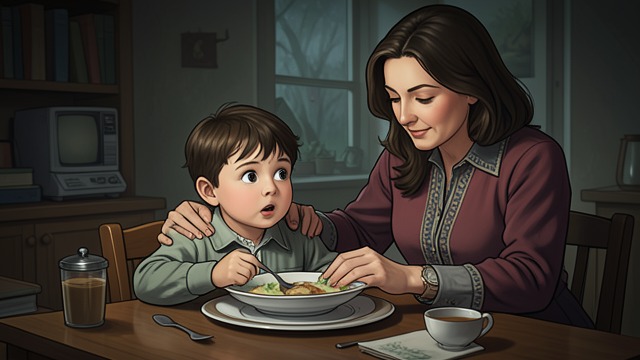
The Divine Child
Reverence in ordinary acts
Nishio-san treats the Narrator (God) as an okosama, allowing the child to eat from her plate and granting its wishes. Such care confirms the child’s sense of sacred importance.
Love mistaken for worship
The child interprets tenderness as evidence of divinity, while Nishio-san’s attachment is also grounded in ordinary human care. Their closeness sustains both affection and the child’s self-mythology.
The Resignation Plea
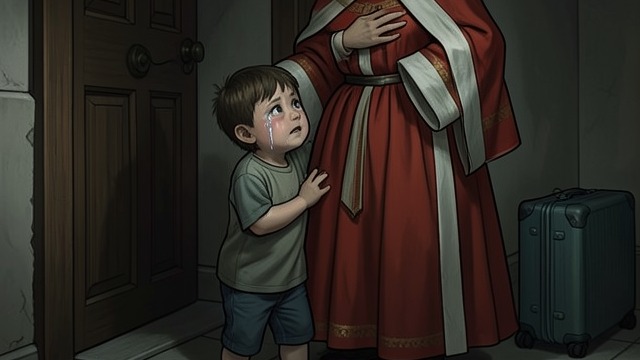
The Resignation Plea
Fear of separation
When Nishio-san says she may leave, the Narrator (God) clings to her and begs her to stay. The child cannot yet separate an employment decision from the loss of a beloved person.
A wider grief emerges
Mother’s explanation that the family will also leave Japan makes the child’s fear larger than one relationship. The possibility of losing Nishio-san becomes part of losing an entire world.
A Temporary Embrace
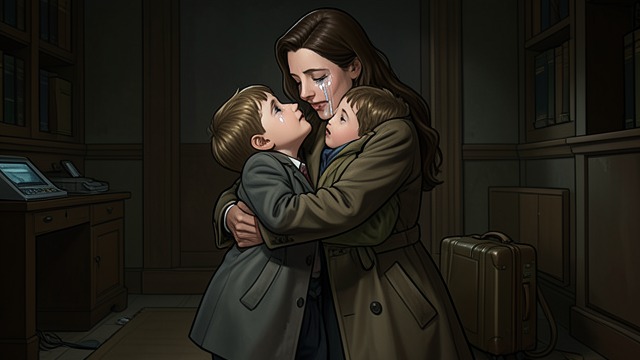
A Temporary Embrace
Reassurance restored
Nishio-san returns and promises she will stay. The Narrator (God) embraces her with renewed intensity, relieved that the immediate rupture has been avoided.
Affection under a deadline
The child now knows that a promise to stay cannot undo the family’s future departure. Love becomes more urgent because the time available for it is limited.
Choosing Fiercer Love
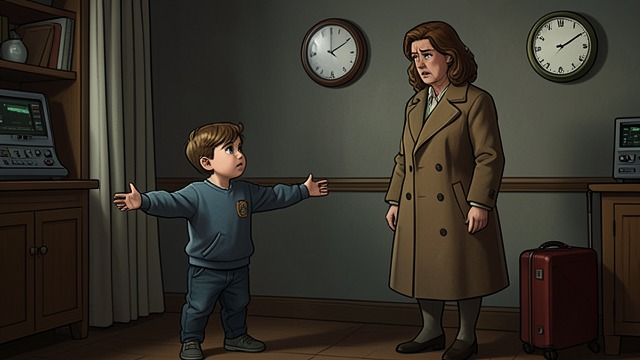
Choosing Fiercer Love
Two possible defenses
The child understands that attachment can lead to grief and considers avoiding it. That response would protect against loss only by refusing the relationship itself.
Love despite its end
The Narrator (God) chooses to love more intensely while there is time. This principle turns anticipated mourning into a reason for fuller affection, not withdrawal.
After the February 1970 awakening
At age two and a half
At age three
Later the same day
After the family’s departure is announced
